Nothing To Declare Passengers
Read people as carefully as you read noisy bag scans.
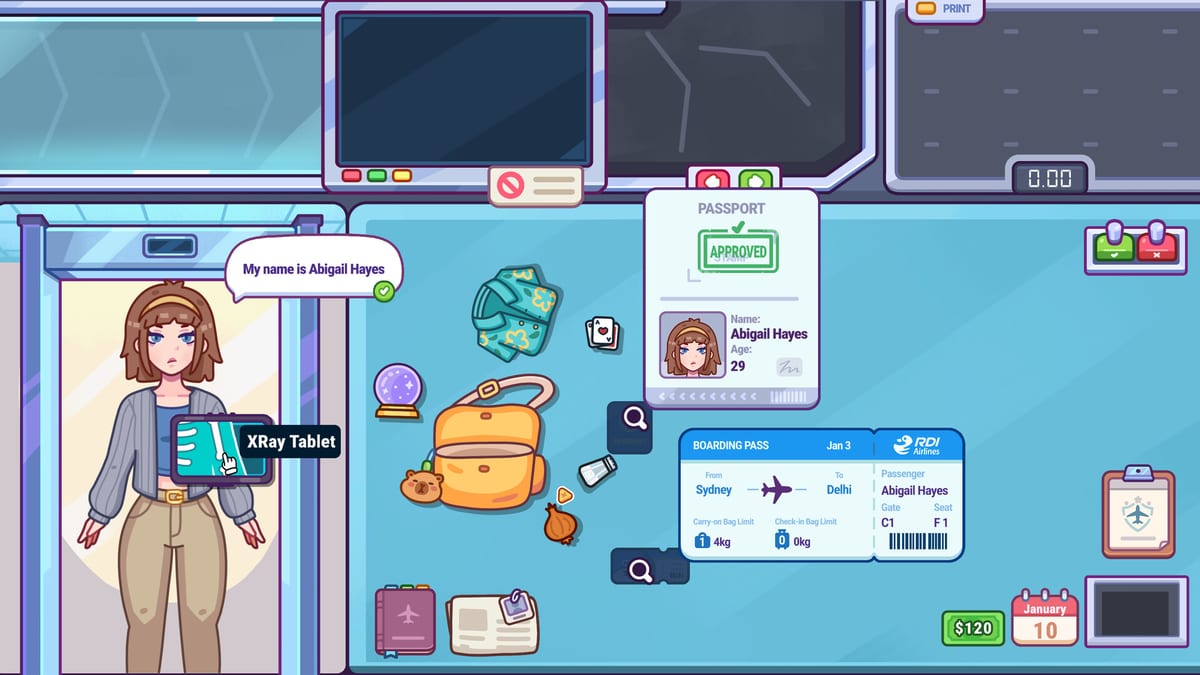
Passengers are the narrative fuel of Nothing To Declare. Each traveler arrives with a face, a vibe, a story, and a bag that may or may not agree. This page helps you read people as evidence—without turning the cozy checkpoint into a cynicism machine.
What passenger knowledge is for
You are not collecting lore binders. You are learning patterns that sharpen interviews and tell you when a friendly smile is cheaper than a clean scan. Pair traveler reads with physical tools: bag weighing, x-ray scanning, and luggage search.
Useful archetype lenses
Instead of memorizing every character, sort travelers by how they interact with suspicion:
The over-explainer floods you with itinerary detail. Sometimes honesty, sometimes camouflage. Ask one ownership question and see if the flood still matches the bag.
The minimalist answers short and hopes you move on. Short is fine when weight and scan agree. Short plus messy hardware is a search candidate.
The comedian leans on jokes and Lost But Found energy. Laugh, then inspect the oddly shaped electronic anyway if the silhouette is wrong.
The stressed innocent looks guilty while packing socks. Do not punish nerves alone. Demand consistency, not vibes.
The calm mismatch sounds perfect while the scale or scan disagrees. This is your highest-value interview target.
Developer updates have also teased fuller-cast complications—high-risk travelers, express passengers, and more document types in the wider feature roadmap. Treat those as evolving categories via Updates, not as excuses to ignore the core loop.
Matching stories to bags
A good passenger story should predict packing. Business day-trippers should not silhouette like moving day. Family vacation energy can explain volume, not bombs. If the story cannot predict the dense island on your x-ray, escalate.
Use Contraband & Suspicious Items as the object-side twin of this page. People lie; objects still have shapes.
Interview habits by traveler vibe
- Soft openers for stressed innocents.
- Ownership checks for calm mismatches.
- Itinerary pressure for over-explainers whose details drift.
- Search prep whenever dialogue fails to resolve a physical clue.
The Shift Checklist keeps you from skipping tools because a passenger was charming.
First-shift people skills
On day one, your goal is calibration. Follow First Shift Tips and How to Play. Note which archetypes trick you. Many officers over-trust comedians and under-trust quiet travelers. Correct both biases with evidence rules, not personality scores.
Money, upgrades, and long shifts
Reading passengers well reduces false searches and missed threats, which stabilizes income for Earning Money goals and Workstation Upgrades. Later queues get busier; archetype fluency is how you stay kind without getting played.
Related routes
Browse the Items hub, mechanic depth in the Guides hub, comfort options in Controls, expectations in the review, and official channels on Official Links.
Trust people enough to hear them. Trust bags enough to verify them. The truth is usually in the overlap.
Dialogue samples that train better reads
You do not need exact script spoilers to practice. Invent hypothesis-based prompts in your head before you click:
- “Who packed this bag?”
- “How long is the trip really?”
- “Why does the heavy corner exist?”
- “Can you describe the weird device without joking past it?”
Then listen for whether the answer predicts the bag. Prediction is the skill. Charm is the distraction. If answers are poetic but non-predictive, escalate toward search using the rules in Luggage Search.
Passengers across a growing airport
As the game adds high-risk travelers, express lanes, or document-heavy cases, archetypes multiply. Do not throw away the basic lenses on this page. Express pressure will tempt skimming. High-risk labels will tempt over-searching. Documents will tempt tunnel vision. Your counter is still the same multi-channel loop from How to Play and the discipline of the Shift Checklist.
If you enjoy character writing as much as systems, great—Just remember the grade cares about evidence. The review explains that balance for buyers; this page explains it for operators.
Frequently Asked Questions
Quick answers to the most common questions.
Do passenger personalities matter in Nothing To Declare?
Yes. Tone and answer style help, but they must be checked against weight, x-ray, and search evidence.
Should nervous passengers always be searched?
No. Nerves alone are not proof. Escalate when their story conflicts with bag clues.
How do I handle joke-heavy travelers?
Enjoy the writing, then still inspect oddly shaped electronics or dense anomalies that lack explanation.
What is a calm mismatch?
A passenger who sounds perfect while the scale or scan disagrees—often worth a focused interview or search.
Where should I go next?
Contraband for object patterns, Passenger Interviews for dialogue tactics, and the Shift Checklist for live play.