Nothing To Declare Passenger Interviews
Use dialogue to pressure-test stories before you unzip a bag.
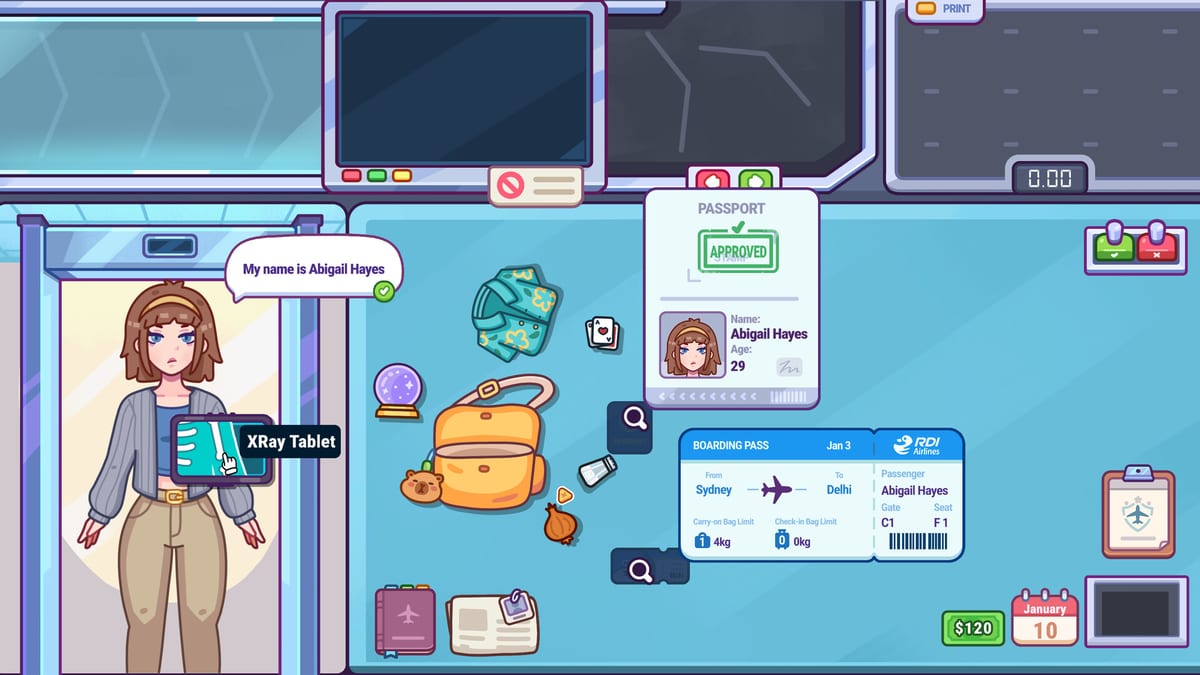
Passenger interviews are the social mini-game of Nothing To Declare. After weight and x-ray give you physical clues, dialogue lets you test whether a traveler’s story still holds. This guide explains how to pick questions, read shaky answers, and escalate without turning every charming tourist into a criminal.
Why interviews exist
Not every threat is obvious on a scan. Some passengers are nervous for innocent reasons. Others are calm while packing nonsense. Interviews sit between soft suspicion and a full luggage search: cheaper than unzipping everything, sharper than guessing.
Use interviews when:
- The bag weight conflicts with the stated trip—see bag weighing.
- The x-ray is ambiguous rather than clearly dangerous.
- Documents, destination, or attitude feel inconsistent.
- You need one more signal before spending time on a search mini-game.
Choosing dialogue with intent
Do not click options randomly for flavor. Each question should chase a hypothesis.
Ownership questions ask who packed the bag and whether contents are personal. Useful when the silhouette looks unfamiliar to the traveler’s claimed lifestyle.
Itinerary questions probe destination, duration, and purpose. Useful when weight or packing density looks wrong for a short hop or a long stay.
Consistency questions revisit an earlier detail. If the story drifts, suspicion rises even if the passenger remains polite.
Pressure questions are for when soft asks already failed. Use them after you already have a physical clue, not as your opening move on every friendly face.
Cross-reference traveler vibes with the Passengers page so archetypes do not surprise you mid-shift.
Reading answers like evidence
In a cozy game, lies are rarely shouted. Watch for mismatch more than melodrama:
- Answers that ignore the weird object your scan suggested.
- Over-specific stories that still fail to explain density or weight.
- Sudden hostility after a simple ownership question.
- Too-perfect calm when every other signal is messy.
Remember the performance economy from How to Play: false accusations and missed threats both hurt. Interviews exist to reduce both errors.
Interview to search pipeline
A clean interview can justify a clear. A broken interview can justify a search. The middle case—polite but incomplete answers—should send you back to the physical tools. Re-check weight. Re-scan with fresher eyes. If two channels still disagree, unzip.
When you do search, know what you are hunting. Keep Contraband & Suspicious Items open and use the Shift Checklist so dialogue never replaces the rest of the desk routine.
Soft skills for a cozy checkpoint
Nothing To Declare sells warmth as much as suspicion. Passengers can be funny, awkward, or oddly sincere. Enjoy the writing, then still do the job. Humor is not a boarding pass. Lost But Found callbacks in luggage make conversations more entertaining; they should not make you lazy.
If early shifts feel socially noisy, practice on First Shift Tips pacing: one careful interview per uncertain bag beats three rushed chats that teach nothing.
Money and upgrade angle
Good interviews protect income by preventing both panic searches and blind clears. That steadier cash flow funds workstation upgrades. If you are leaking money to penalties, study Earning Money alongside this page—dialogue accuracy is part of your economy.
Related pages to keep nearby
- Guides hub for the full curriculum.
- Controls if dialogue UI click targets feel fiddly.
- Review if you want expectations for tone and difficulty.
- Updates for rule and document changes after launch.
- Official Links for Steam discussions when community tips evolve.
Interview like a curious officer, not a cartoon interrogator. Ask for the detail that would make the bag make sense—then believe the evidence when it does not.
Frequently Asked Questions
Quick answers to the most common questions.
When should I interview a passenger in Nothing To Declare?
Interview when weight, x-ray, or documents feel inconsistent, or when you need one more signal before searching.
Can a good interview replace a search?
Sometimes. If answers resolve the mismatch and physical clues look clean, you can clear. Persistent conflict means search.
What makes an answer suspicious?
Inconsistency with bag evidence, refusal to explain odd items, drifting details, or aggression after basic questions.
Should I ask the harshest question first?
Usually no. Start with ownership or itinerary checks, then pressure only after soft questions fail.
Do passenger types change interview strategy?
Yes. Archetypes differ in tone and risk. Use the Passengers page to learn patterns without ignoring bag evidence.