Nothing To Declare Contraband & Suspicious Items
Build a practical catalog of what should never get a lazy clear.
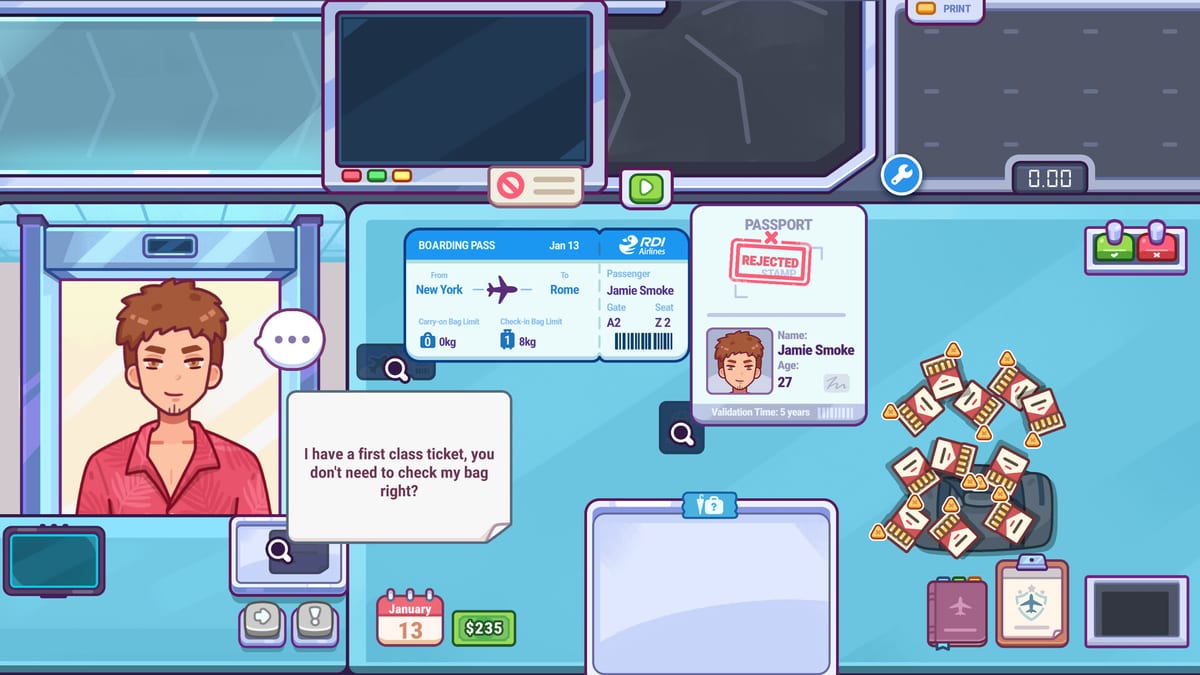
In Nothing To Declare, “contraband” is less a fixed shopping list and more a judgment category: objects that threaten safety, break shift rules, or refuse to match the passenger’s story. This page helps you recognize suspicious finds during x-ray scanning and luggage searches without inventing fake item codes or spoiling every joke reveal.
Think in threat families
Clear danger shapes
Bombs and explicitly dangerous hardware are the headline failures if you miss them. On scans they often read as dense, assembled, or awkwardly compartmentalized. If a silhouette looks built rather than packed, escalate.
Oddly shaped electronics
The game’s signature trick. A device can look hilarious, handmade, or universe-referential and still deserve inspection. Treat weird electronics as “must explain,” not “must confiscate on sight.” Interviews exist for that middle ground—see Passenger Interviews.
Dense sealed packs
Anything that adds unexplained mass relative to the story should raise your bag weighing antenna. Sealed bundles inside soft clothing are classic “open me” invitations during search mini-games.
Rule-break packing
As shifts grow, newspapers, documents, and special inspection rules can redefine what counts as a problem. A legal souvenir yesterday can be a violation under today’s posted rule. Keep an eye on Updates when patches expand inspection toys.
How contraband appears across tools
On the scale: Danger does not always mean overweight, but overweight plus a thin story is a classic setup. Use mass to form a hypothesis, not a verdict.
On the x-ray: Look for foreign silhouettes, wiring, stacked cells, or hardware islands in the noise. Re-read the four-pass method in the x-ray guide.
In dialogue: Passengers who cannot explain a dense object they supposedly packed themselves are waving a flag. Cross-check archetypes on Passengers.
In the bag: Search carefully. Soft filler first, hard objects second, weird electronics always inspected. The luggage search guide covers pacing so you do not destroy your queue time.
Lost But Found universe clutter
Rogue Duck’s airport toys share a universe vibe with Lost But Found. Luggage can contain charming callbacks and collectible nonsense. That is part of why Nothing To Declare feels cozy instead of clinical. It is also why lazy clears feel tempting. If an object is dense, wired, sealed, or story-broken, the crossover charm does not protect it.
Escalation cheat sheet
- One mild oddity + clean story → note it, maybe one interview question.
- Weird electronic + vague ownership → interview, prepare to search.
- Danger-shaped assembly on scan → search; do not negotiate with the silhouette.
- Ruleboard violation with physical proof → resolve per the shift’s posted expectations.
Keep the Shift Checklist open so contraband hunts never skip weighing or scanning.
Economy and upgrades
Catching real problems protects performance money. Missing them funds regret. Reinvest clean earnings into Workstation Upgrades and study income habits on Earning Money. Better tools help, but recognition skill is the real contraband detector.
Study loop that works
After any search, name the threat family out loud. After any miss, write which tool should have caught it. Pair this page with First Shift Tips if you are still building confidence, and with the full Guides hub when you want mechanic depth. Platform and tone context live in the review; official destinations are on Official Links.
Suspicious does not always mean evil—but unexplained almost always means “look again.”
Field notes from common misses
Most missed threats share a boring autopsy:
- The officer trusted a cute passenger more than a messy silhouette.
- The officer saw one weird object and stopped scanning the rest of the bag.
- The officer treated average weight as a blessing instead of a neutral fact.
- The officer searched too late after already deciding to clear emotionally.
Write those four failure modes on a sticky note. They will catch more problems than memorizing twenty object names. When you do catch something, screenshot or jot the shape language—rounded slab, wired cluster, sealed brick—so the next x-ray session has vocabulary.
Contraband versus ruleboard violations
Not every problem is a cartoon bomb. Some issues are contextual: today’s posted rule, a missing document, a packing choice that becomes illegal under the shift’s newspaper logic. That is why updates matter. A patch that adds drug checks, event invitations, or camera tools changes what “suspicious” means without deleting the core desk loop. Stay current via Updates and confirm details on Official Links.
Meanwhile, keep practicing the durable skill: unexplained dense objects earn attention. Explained soft packing earns a clear. Everything else earns a question.
Frequently Asked Questions
Quick answers to the most common questions.
What counts as contraband in Nothing To Declare?
Objects that threaten safety, break posted shift rules, or cannot be explained by the passenger’s story and packing.
Are oddly shaped electronics always illegal?
Not always. They are high-interest finds that need explanation through interview or search.
Can I identify threats from weight alone?
No. Weight builds a hypothesis. Confirm with x-ray, dialogue, and search when needed.
Do Lost But Found items change the rules?
They add flavor and familiar oddities. Still judge density, wiring, and story fit.
How should I practice contraband recognition?
After each search, categorize the find. After each miss, note which clue channel you ignored.