Nothing To Declare Bag Weighing
Turn a simple scale reading into a sharp security hypothesis.
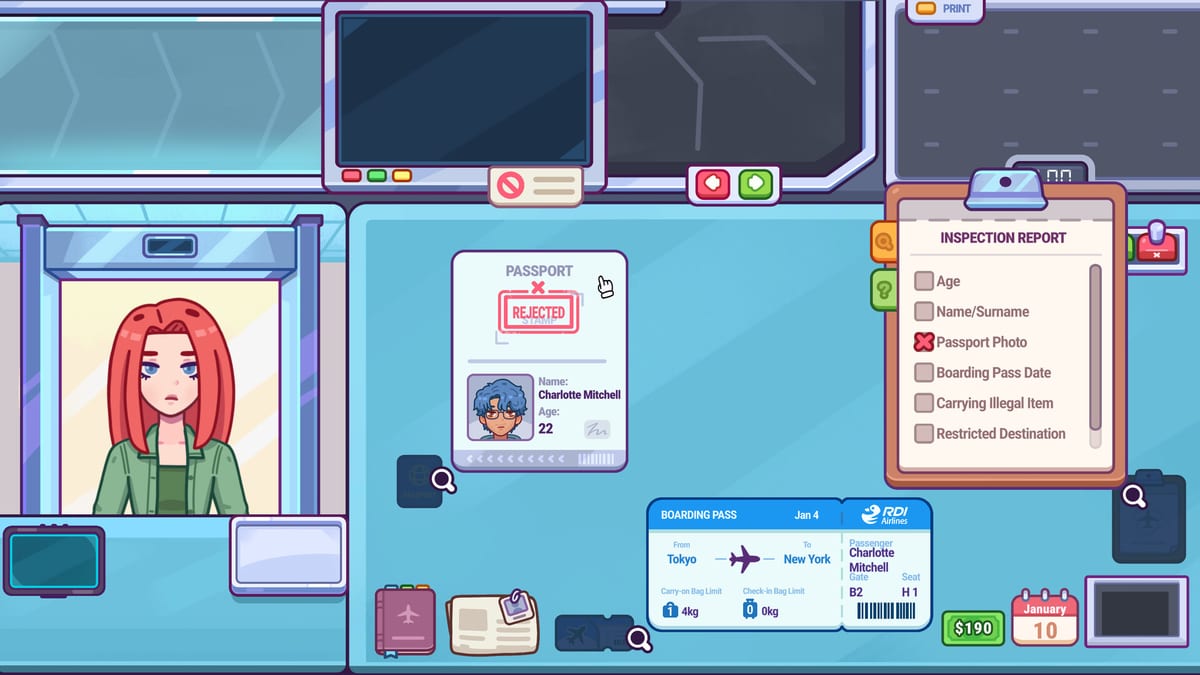
Bag weighing looks like the simplest station in Nothing To Declare, and that is why players underrate it. The scale does more than scold overweight suitcases—it helps you guess what might be inside before the noisy x-ray even loads. This guide shows how to read weight as evidence, connect it to passenger stories, and escalate at the right time.
What the scale tells you
A bag’s weight answers a physical question: does this luggage match the claimed trip and packing style? A short weekend story with a boulder-heavy case is a clue. A long relocation story with a suspiciously light bag can also be a clue. Limits matter, but narrative fit matters more.
Use weighing as your first physical filter after greeting the passenger. It is fast, readable, and perfect for building a hypothesis you will test with scans and interviews.
Building a weight hypothesis
Ask yourself four quick prompts every time the number appears:
- Trip length fit �?Does the mass match days away and purpose?
- Passenger fit �?Would this traveler plausibly pack this much?
- Limit pressure �?Is the bag pushing or blowing past expected limits?
- Hidden density �?Could a small dangerous object still hide in a normal total?
That fourth prompt prevents a common mistake: assuming only heavy bags are dangerous. Flat threats and compact electronics can ride inside average weights. Weight is a clue channel, not a guilt meter.
From scale to next tool
- Normal weight + calm story �?still scan, but you can move with confidence.
- Heavy weight + vague story �?prioritize careful x-ray passes and sharper interview questions.
- Weight that conflicts with documents or dialogue �?prepare for a luggage search.
- Weirdly light bag with dense scan shapes �?treat as high interest; something may be misdeclared in spirit even if the number is low.
The How to Play page frames this as multi-channel judgment. Weighing starts the conversation; it rarely finishes it alone.
Practical weighing habits
Keep the Shift Checklist nearby so you never skip the scale when the queue gets theatrical. Compare weight notes to finds on Contraband after searches—your brain will start linking certain mass vibes to certain object classes.
On your first few days, follow First Shift Tips and narrate the hypothesis out loud. “Heavy for a day trip—expect hardware or overpacking.�?That sentence makes the later x-ray faster because you already know what surprise would confirm the theory.
Economy angle
Correct weight-informed decisions reduce both misses and wasted searches, which protects earnings. Steadier income unlocks workstation upgrades sooner. If penalties keep landing because you ignore the scale, fix that habit before buying shiny desk toys—see Earning Money.
Common weighing mistakes
- Clearing every average-weight bag without scanning.
- Searching every heavy bag without interviewing.
- Forgetting that cozy Lost But Found packing can include dense oddities.
- Treating the scale as optional flavor instead of a core clue.
Avoid those, and bag weighing becomes one of the most reliable early tells in the game.
Related pages
Browse sibling guides from the Guides hub, learn traveler patterns on Passengers, and confirm input comfort in Controls. For tone and difficulty expectations, read the review. For launch and patch context, see Updates and Official Links.
Weigh first, guess smart, then prove yourself with the scanner—not with panic.
Worked examples at the scale
Imagine three common first-week cases.
Case A: A cheerful day-tripper with a suitcase that thuds onto the scale like a small fridge. The story says “just a change of clothes.�?Your hypothesis is overpacking or hidden hardware. You do not confiscate on the number alone—you enter x-ray scanning already hunting dense islands, then ask an ownership question if the silhouette looks built rather than folded.
Case B: A long-haul traveler with a surprisingly light bag and a calm smile. Light is not safe. Flat threats and compact electronics can hide under average totals. Your job is to refuse the comfort of “the number looks fine,�?complete your scan passes, and only clear when the image and story agree.
Case C: Weight matches the trip, scan looks mostly soft, but one corner refuses to look like fabric. Here weighing did its job by not panicking you; the scan and maybe a short interview finish the decision. Good officers celebrate boring agreement as much as dramatic catches.
Teaching your eyes with the scale
Keep a tiny mental log for ten passengers: expected mass vibe versus actual. Over time you will feel when a bag is “wrong for this face�?before you can articulate why. That feeling is not magic—it is compressed memory from contraband categories and passenger archetypes.
If you want a structured drill, combine weighing focus with the Shift Checklist and forbid yourself from opening the x-ray until you have spoken a one-sentence hypothesis. The sentence can be wrong. It cannot be skipped.
Frequently Asked Questions
Quick answers to the most common questions.
Is a heavy bag always suspicious in Nothing To Declare?
No. Heavy bags need a story that fits. Escalate when weight conflicts with trip claims or other clues.
Can light bags still hide threats?
Yes. Compact electronics and flat danger items can hide inside normal or light totals. Always scan.
Should weighing come before x-ray?
Usually yes. Weight is a fast hypothesis builder that makes your scan passes more focused.
How does weighing affect money?
Better weight judgment means fewer missed threats and fewer useless searches, which protects your grade and cash.
What page should I read after this?
X-Ray Scanning next, then Passenger Interviews and Luggage Search for the full escalation path.